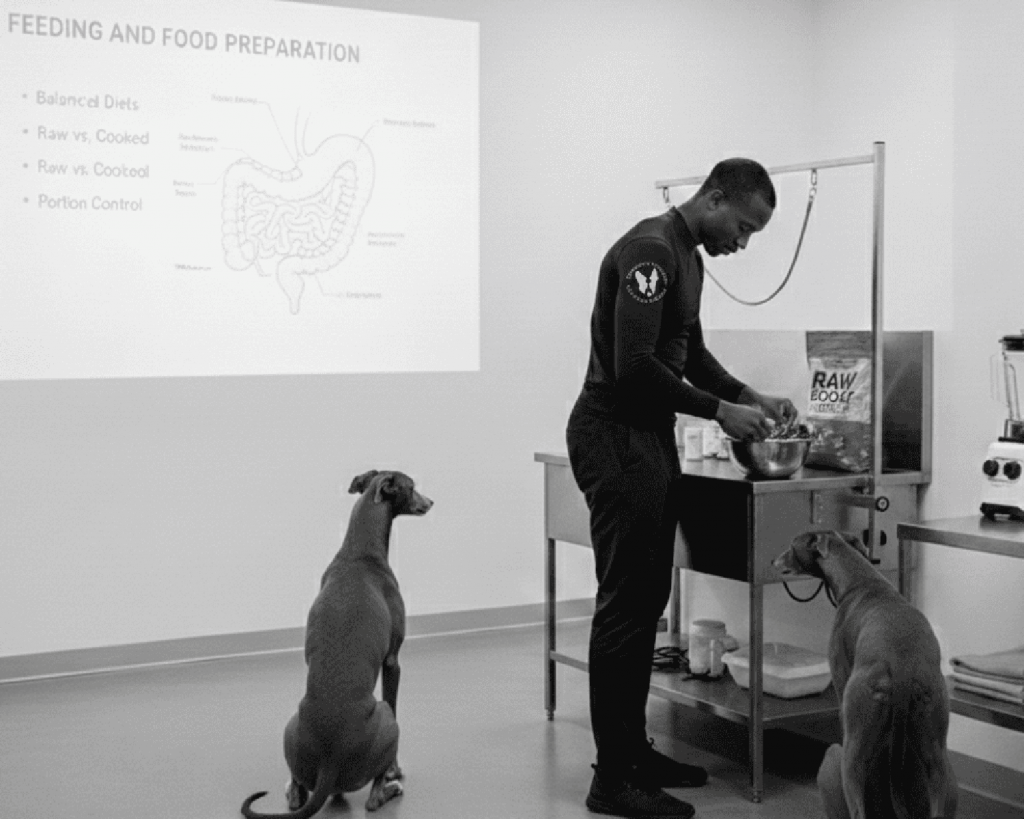
Module 5: Feeding & Food Preparation
Choosing the right food for your dog is one of the most important decisions you can make as a pet owner. A dog’s diet is the foundation of their health, directly influencing their energy levels, digestive function, coat condition, and long-term well-being. While highly processed options like traditional kibble and canned food have been staples for decades due to their convenience and cost, a growing number of pet owners and veterinary professionals are exploring and advocating for diets that are less processed and more nutritionally robust.
The Role of Processed Foods: Kibble and Tinned
Processed dog foods, including dry kibble and tinned wet food, dominate the market. Their primary advantages are long shelf life, affordability, and convenience. Many commercial brands are formulated to meet general nutritional guidelines and are a reliable way to ensure your dog is getting their basic dietary needs met.
However, these diets often have their drawbacks. Kibble is typically high in carbohydrates, acting as a binder for the ingredients, and may contain low-quality protein sources, fillers, and artificial preservatives. The manufacturing process itself, which uses high heat, can diminish the nutritional value of the raw ingredients. Similarly, while wet food is more palatable and hydrating, many canned options also contain an abundance of fillers and are heavily processed. For dogs with food sensitivities or chronic health issues, these heavily processed diets can sometimes exacerbate the problem.
The Raw Diet: A Healthier, Less Processed Alternative
The raw diet, often referred to as biologically appropriate raw food (BARF), is a feeding philosophy built on the premise that a dog’s digestive system is best suited for uncooked meat, bones, and organs, mirroring a natural, ancestral diet. Proponents of raw feeding often report significant health benefits, including a shinier, healthier coat, cleaner teeth, improved digestion, and increased vitality.
There are two main approaches to feeding a raw diet:
- DIY (Do-It-Yourself) Raw Diet: This method involves sourcing and preparing all ingredients at home. A balanced DIY raw diet adheres to the “prey model,” which aims to replicate the proportions of a dog’s natural prey: approximately 80% muscle meat, 10% edible bone, and 10% organs (with 5% being liver and 5% being other secreting organs). While this approach gives you complete control over your dog’s food, it is a significant commitment. It requires extensive knowledge and meticulous precision to ensure the diet is nutritionally complete and avoids dangerous imbalances or deficiencies.
- Commercial Raw Diet: For many, this is the most practical and safest way to feed a raw diet. Several reputable manufacturers offer complete and balanced raw meals in one package. These products are formulated by canine nutritionists and adhere to guidelines set by organisations like the Association of American Feed Control Officials (AAFCO). They come in frozen patties, nuggets, or ground form, making them easy to portion and serve. This approach removes the guesswork and risk of creating an unbalanced diet while still providing the benefits of raw, minimally processed ingredients.
Home-Cooked and Other Healthy Options
For owners who are not comfortable with raw food but want to move away from processed kibble, home-cooked diets and fresh-food services offer another avenue. These meals are typically prepared with human-grade ingredients and cooked to a safe temperature. However, like a DIY raw diet, they require a deep understanding of canine nutritional needs. Simply giving a dog cooked meat and vegetables without the proper balance of vitamins and minerals can lead to serious deficiencies over time. Consulting with a veterinary nutritionist is crucial for creating a safe and complete home-cooked meal plan.
Food Preparation and Safety
Whether you choose a raw or home-cooked diet, proper food preparation and handling are crucial. This includes using separate cutting boards and utensils for your dog’s food, thoroughly washing hands and surfaces after handling raw meat, and storing ingredients at appropriate temperatures. These practices minimize the risk of bacterial contamination for both your pet and your family.
Key Considerations for All Diets
- Balance is Key: A diet that is not nutritionally balanced can cause severe health problems.
- Sourcing and Safety: For any diet involving fresh ingredients, especially raw meat, proper food handling is paramount to prevent bacterial contamination.
- Professional Guidance: Always consult with a veterinarian or a certified veterinary nutritionist before making a significant change to your dog’s diet. They can help you create a plan tailored to your dog’s specific age, breed, and health needs.
Choosing a healthier, less processed diet is a proactive step toward your dog’s long-term health. Whether you opt for a convenient, balanced commercial raw food or a carefully managed home-cooked diet, the commitment to providing high-quality nutrition is a powerful act of care for your canine companion.
Common foods that are toxic to dogs:
- Grapes and Raisins: Can cause acute kidney failure.
- Chocolate, Coffee, and Caffeine: Contain methylxanthines, which are stimulants that can cause vomiting, diarrhea, seizures, and abnormal heart rhythms. Dark chocolate and baking chocolate are the most dangerous.
- Xylitol: This artificial sweetener, found in sugar-free gum, candy, and some peanut butter, can cause a rapid drop in blood sugar and liver failure.
- Onions, Garlic, and Chives: These vegetables can damage a dog’s red blood cells and lead to anaemia.
- Macadamia Nuts: Can cause weakness, vomiting, tremors, and hyperthermia.
- Alcohol: Can cause vomiting, diarrhea, central nervous system depression, and even death.
- Avocado: The fruit, pit, leaves, and bark contain a toxin called persin, which can cause vomiting and diarrhea. The pit is also a choking hazard.
- Raw Yeast Dough: Can expand in the stomach and cause a painful, life-threatening bloat. The fermenting yeast also produces alcohol, leading to alcohol poisoning.
- Cooked Bones: While not a food, cooked bones can splinter and cause serious damage, including choking or perforating a dog’s digestive tract.
It is always best to consult with a veterinarian if you believe your dog has ingested a toxic food, as even small amounts can be harmful depending on the dog’s size and the amount consumed.