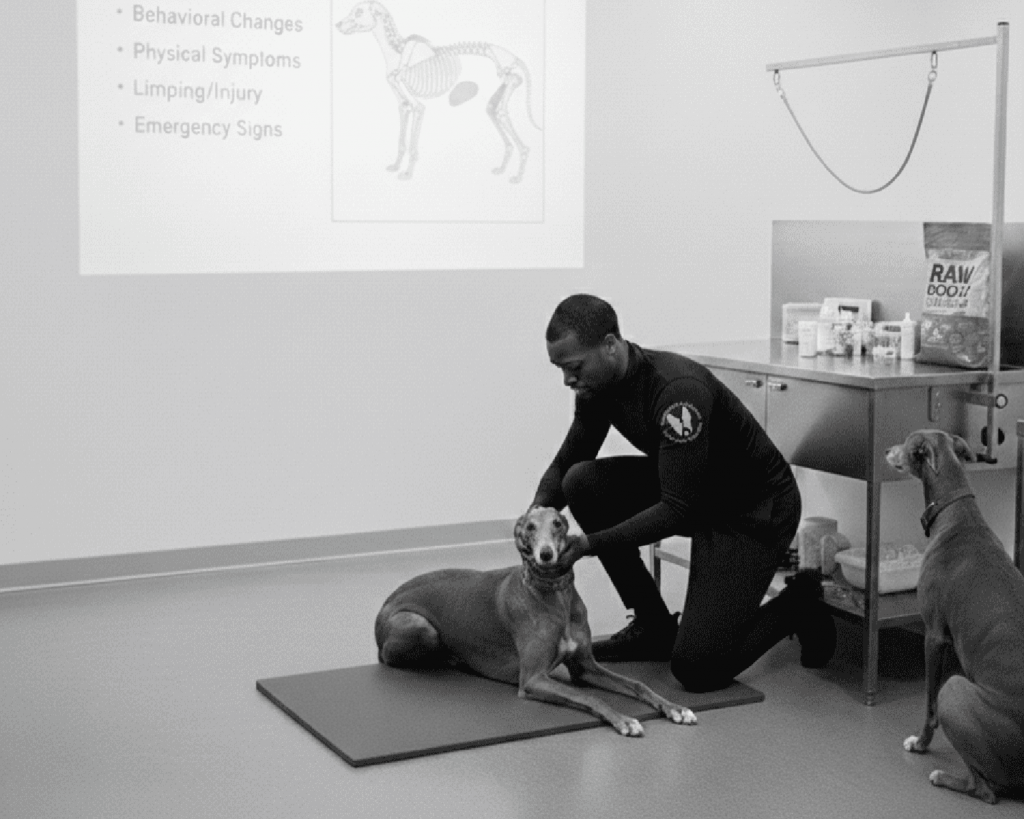
Module 7: Recognising a Sick or Injured Animal
This course is designed to equip dog owners and caretakers with the knowledge to identify signs of illness and injury in dogs. Early recognition and appropriate action are crucial for a positive outcome and can significantly reduce an animal’s suffering.
General Signs of Illness
1.1 Behavioural and Postural Changes A dog’s normal behaviour is your baseline. Deviations from this can be a key indicator of illness.
- Lethargy or Unwillingness to Move: A significant decrease in energy, disinterest in play, or reluctance to stand or walk.
- Hiding or Anti-social Behavior: A dog that normally seeks company suddenly hides or becomes withdrawn.
- Restlessness or Inability to Settle: Pacing, circling, or constantly shifting positions, often a sign of discomfort or pain.
- Postural Changes: A hunched back, a tucked tail, or an unusual head tilt can indicate pain or a neurological issue.
Changes in Eating, Drinking, and Elimination Monitoring a dog’s basic bodily functions is a simple way to detect problems.
- Appetite Changes: A sudden loss of appetite or a significant increase in thirst.
- Vomiting and Diarrhea: These can be signs of digestive upset, infection, or a more serious condition.
- Difficulty Urinating or Defecating: Straining, crying out, or frequent, unsuccessful attempts can indicate a blockage or urinary tract infection.
Physical and Appearance Changes A visual inspection can reveal many signs of illness.
- Dull Coat or Poor Grooming: An unkempt, greasy, or matted coat can be a sign of chronic illness or a lack of self-grooming due to pain.
- Changes in Eyes, Ears, and Nose: Discharge, redness, swelling, or cloudiness in the eyes; a hot, dry, or running nose; and a foul odor or discharge from the ears.
- Weight Loss or Gain: Unexplained changes in body weight over a short period.
Recognising Injury and Pain
Signs of Pain Dogs often mask pain, so it’s important to be vigilant for subtle cues.
- Vocalisation: Whining, growling, yelping, or whimpering, especially when touched.
- Limping or Lameness: Favoring a limb or an uneven gait.
- Excessive Licking or Chewing: Focusing on a specific area of the body, which may indicate a painful spot.
- Aggression: A normally friendly dog may snap or growl when in pain.
Common Injuries to Look For
- Lacerations and Punctures: Any cuts, scratches, or holes in the skin.
- Fractures or Sprains: Swelling, a change in limb shape, or a refusal to bear weight.
- Burns: Reddened or blistered skin, often from hot pavement, chemicals, or fire.
- Internal Bleeding: Signs include pale gums, a weak pulse, and swelling in the abdomen.
Emergency Response and First Aid
Staying Calm and Assessing the Situation The first step in any emergency is to ensure your own safety and then to assess the situation calmly.
- Secure the Animal: Gently contain the dog in a safe space to prevent further injury.
- Do Not Move a Severely Injured Animal: If you suspect a spinal or severe limb injury, avoid moving the dog, as this could worsen the injury.
- Contact a Veterinarian: Always call your vet or an emergency vet clinic for advice before administering any first aid, as they can provide guidance and prepare for your arrival.
Basic First Aid
- Bleeding: Apply firm, direct pressure with a clean cloth or bandage to stop bleeding.
- Choking: Open the dog’s mouth and check for an obstruction. If you can safely remove it with tweezers, do so, but be careful not to push it further down.
- Heatstroke: Move the dog to a cool, shaded area and cool it down with cool (not cold) water, focusing on the paws and groin.