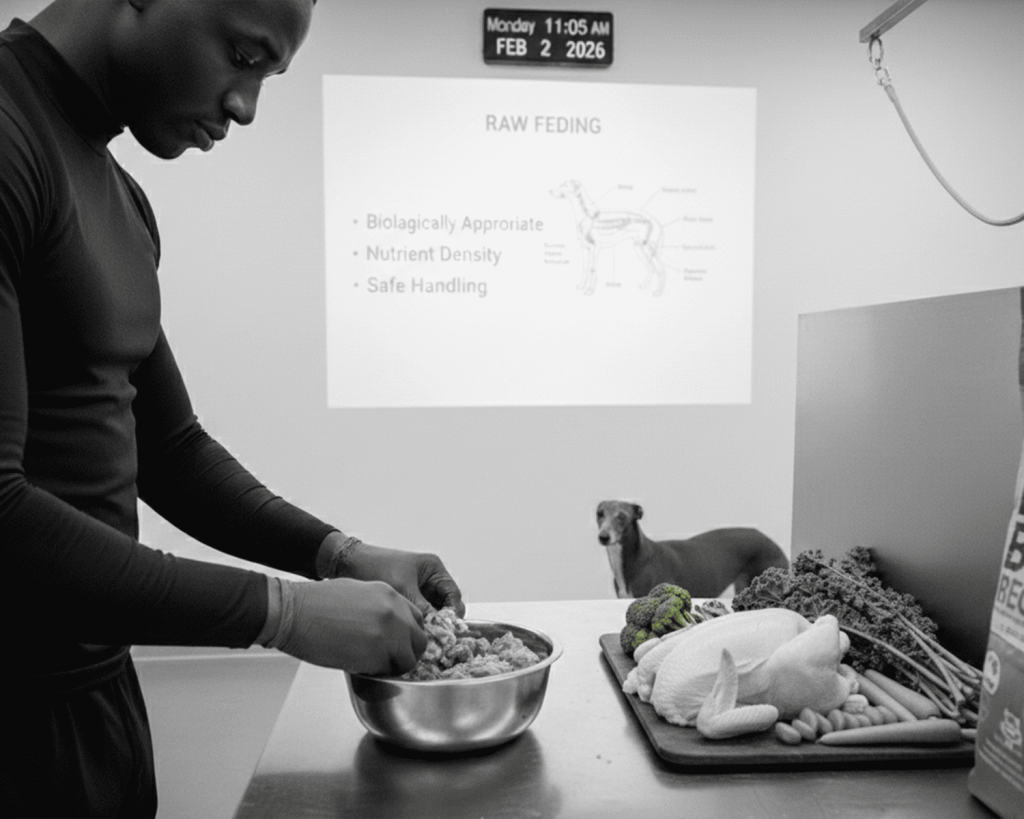
Module 9: Raw Feeding
Fundamentals of Nutrition
Nutrition is the foundation of biological health. For carnivores, the metabolic priority is protein and fat over carbohydrates.
- Amino Acids: Essential building blocks. Dogs need 10; cats need 11 (including Taurine).
- Fatty Acids: Omega-3 (anti-inflammatory) and Omega-6 (skin/coat) must be balanced to prevent systemic inflammation.
- Enzymes: Raw food contains live food enzymes that assist digestion, whereas high-heat processing (kibble) destroys them.
Specific Requirements & Deficiencies
- Zinc: A common gap that manifests as cracked paw pads, skin lesions, or a dull coat.
- Nutrient Deficiencies:
- Thiamine (B1) Deficiency: Can cause neurological seizures (often seen in low-quality fish diets).
- Calcium Deficiency: Leads to “All-Meat Syndrome,” causing brittle bones and fractures.
- Factors Affecting Needs: Pregnancy/Lactation requires a 2-4x increase in energy intake. Senior pets require higher-quality, more digestible proteins to offset reduced metabolic efficiency.
Formulating the Diet
A “Biologically Appropriate” diet typically follows the PMR (Prey Model Raw) or BARF (Biologically Appropriate Raw Food) models.
- 80/10/10 Baseline: 80% muscle meat, 10% bone, 5% liver, 5% other secreting organ.
- The “Individual” Adjustment: A husky in a cold climate may need 5% body weight in fat-heavy meat, whereas a sedentary pug may need 2% body weight in lean meat.
Benefits & Disadvantages
- Physical Benefits: Reduction in “doggy odour,” improved dental hygiene via mechanical abrasion of bones, and smaller, biodegradable stools.
- Behavioural Benefits: Tearing meat releases endorphins, providing a natural “calming” effect and mental stimulation.
- Disadvantages: High cost, storage requirements (freezer space), and the risk of secondary hyperparathyroidism if the calcium-to-phosphorus ratio is incorrect.